
For Immediate Release · Gloucester MA, USA — August 22, 2025
Computer Review, the premier digital directory for technology trends and business insights, is proud to announce the release of its new, comprehensive e-Book, Agriculture Technology. The directory offers a deep, analytical dive into the burgeoning Aggrotech sector, providing an essential resource for investors, entrepreneurs, and industry professionals seeking to understand the forces shaping modern agriculture. This e-Book lists more than 700 companies working in 52 countries and is available for download on the Computer Review website.
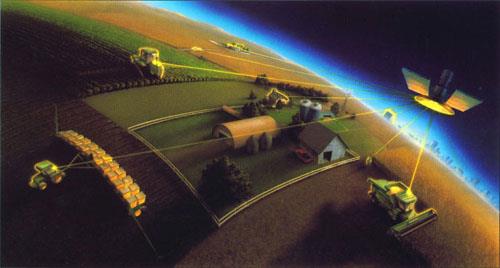
This groundbreaking publication arrives at a pivotal moment for global agriculture, as technology stands poised to solve some of the world's most pressing challenges, from food security and resource scarcity to climate change. The Agriculture Technology e-Book provides an in-depth analysis of key market dynamics, including the role of artificial intelligence, the distinguishing features of successful and declining companies, and a look at the global leaders driving innovation.
The Role of Artificial Intelligence in Aggrotech Success
Artificial intelligence is no longer an optional add-on but a fundamental pillar of success in the Aggrotech space. Successful companies are defined by their sophisticated and practical application of AI, moving beyond mere data collection to provide actionable insights.
One of the most powerful features is predictive analytics. AI models, trained on vast datasets of historical weather patterns, soil conditions, and crop yields, can forecast future outcomes with unprecedented accuracy. This empowers farmers to make proactive decisions, from optimizing planting schedules to mitigating risks associated with pests and diseases. Companies like John Deere, for instance, are leveraging AI in their See & Spray Ultimate system, which uses computer vision to differentiate crops from weeds and apply herbicides with pinpoint accuracy, drastically reducing chemical use and costs.
Another critical AI feature is the use of autonomous and semi-autonomous machinery. AI-powered tractors and harvesters can operate around the clock with remarkable precision, reducing the need for manual labor and increasing operational efficiency. Beyond the fields, AI is revolutionizing controlled-environment agriculture, such as vertical and indoor farming, by optimizing climate control, light, and nutrient delivery to maximize crop output and resource efficiency.
The e-Book also lists companies which are using AI to transform livestock management, with systems that monitor individual animal health through computer vision and sensors, and supply chain optimization, which uses AI to predict demand and streamline logistics.
The Lacking Features that Lead to Decline
While successful companies leverage AI for an competitive edge, there are several critical missing features that often lead to a company’s decline. A primary issue is the failure to integrate solutions. Many companies offer "point-based solutions," such as a single sensor for soil moisture, that do not communicate with other farm systems. This creates fragmented data, requiring farmers to manually piece together information, which is inefficient and undermines the value proposition. Declining companies often lack the interoperability and unified data architecture necessary for a seamless, holistic farm management platform.
Another significant lacking feature is user-friendliness and clear return on investment (ROI). Farmers are practical, business-minded individuals who need solutions that are easy to use and demonstrate a clear, measurable financial benefit. Companies that offer overly complex software requiring extensive training or expensive, unproven hardware with an unclear ROI struggle to gain traction. Many declining Aggrotech ventures fail because they don’t adequately understand the real-world operational challenges and economic constraints faced by their end-users. A lack of reliable technical support and training also compounds this problem, leaving farmers with costly, non-functional tools.
Finally, a key failure point is the inability to build trust around data. Many farmers are hesitant to share their proprietary farm data due to concerns about privacy and its potential use by competitors. Companies that do not have transparent and robust data security policies, or those that fail to articulate a clear value exchange for that data, will find themselves at a severe disadvantage.
Successful AgriTech Companies Around the World
The e-Book provides a comprehensive breakdown of successful Aggrotech companies, spotlighting leaders by country to illustrate the global nature of innovation in the sector.
- United States: The U.S. is a powerhouse of Aggrotech innovation, with established corporations like John Deere leading the way in farm automation and precision agriculture.
Prominent startups include Indigo Ag, which focuses on sustainable farming practices and carbon credits, and AeroFarms, a leader in vertical farming.
- Netherlands: Despite its small size, the Netherlands is a global agricultural leader due to its advanced greenhouse technology and efficient water management systems. Companies such as Ridder Group and Priva are at the forefront of controlled-environment agriculture, providing advanced climate control and irrigation systems.
- Israel: With a history of overcoming agricultural challenges in an arid climate, Israel is a leader in water technology and precision irrigation. Companies like Netafim pioneered drip irrigation, a technology that has revolutionized water efficiency worldwide.
- India: India's Aggrotech sector is booming, driven by a focus on empowering smallholder farmers. Companies like Ninjacart and DeHaat are building digital platforms that connect farmers directly to markets, providing access to quality inputs and expert advice while optimizing the supply chain.
- Germany: As Europe’s largest economy, Germany is a key player in agricultural machinery and research. Infarm is a notable German company specializing in modular, in-store vertical farms, bringing fresh produce closer to consumers.
- Australia: Australia's AgriTech ecosystem is strong in both broadacre farming solutions and controlled-environment agriculture. Companies like Flavorite Group are leading the way in hydroponic and glasshouse-grown produce.
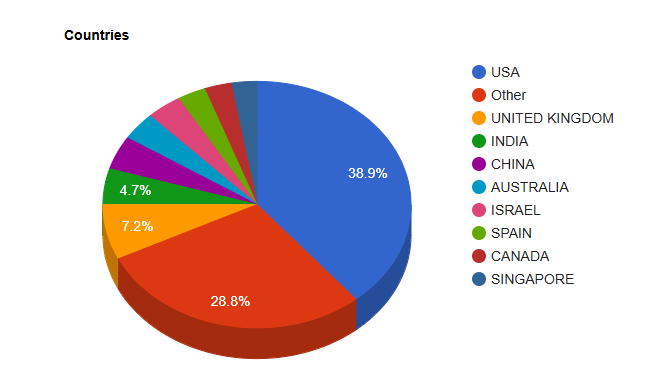
Here is a free tech chart for you showing a percentage of agricultural companies working across the globe!
A Must-Read Resource
The Agriculture Technology e-Book from Computer Review is an invaluable resource for anyone looking to understand the transformative power of technology in agriculture. It provides a roadmap for success, highlighting the technologies and business strategies that are paving the way for a more productive, efficient, and sustainable future.
The full "Agriculture Technology" e-Book is available for download exclusively to subscribers of the Computer Review digital directory. For bulk licensing, academic packages, or customized reports, contact our sales team at sales@computerreview.com.
Explore the full collection
Browse our full collection of e-Books and our special offer, or take a look at the recent press releases about our latest ebooks.