
For Immediate Release · Gloucester MA, USA — August 1, 2025
Computer Review, an AI-driven monitor of companies and technology worldwide, today announced the release of its highly anticipated self-updating e-Book, "Aerospace and Drones." This concise e-pub shows the intricate relationship between Artificial Intelligence (AI) and the rapidly evolving aerospace and drone sectors, offering unparalleled insights into the factors that drive success and contribute to decline among companies in this dynamic landscape.
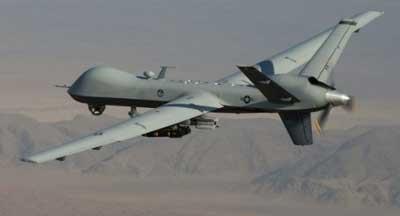
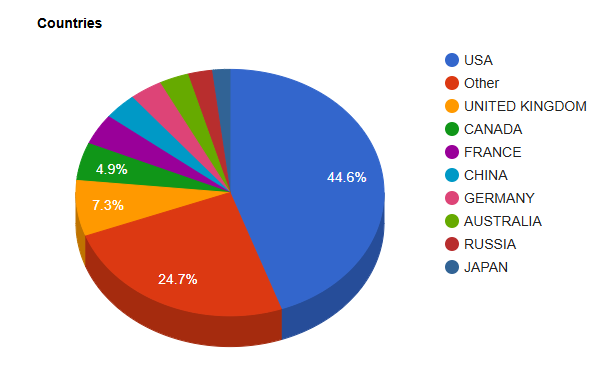
The "Aerospace and Drones" e-Book serves as an essential guide for industry professionals, investors, researchers, and enthusiasts seeking to understand the critical role AI plays in shaping the future of flight and unmanned aerial systems. It meticulously examines the cutting-edge AI features that distinguish market leaders, highlights the strategic oversights that can lead to a company's downfall, and identifies the global powerhouses of AI-centric innovation within this crucial industry. This e- Book lists more than 1700 companies working in 74 countries. Here is a free interactive tech chart for you showing the percentage of companies working in the aerospace and drones sector.
AI Features Exemplifying Successful Companies in Aerospace and Drones
The e-Book analyzes how Artificial Intelligence has become the bedrock of innovation for successful companies in the aerospace and drones domain. Leading enterprises are characterized by their deep integration of AI across various operational facets, moving beyond mere automation to achieve true intelligent autonomy and optimization.
- Advanced Autonomous Navigation and Decision-Making: Successful companies leverage AI for highly sophisticated autonomous flight capabilities. This includes AI algorithms that enable drones and aircraft to navigate complex environments, avoid obstacles dynamically, and make real-time decisions without human intervention. This is crucial for applications ranging from urban air mobility to long-range surveillance missions, ensuring safety, efficiency, and mission success.
- Predictive Maintenance and Anomaly Detection: AI-powered predictive maintenance systems are a hallmark of leading aerospace firms. By analyzing vast datasets from sensors on aircraft and drones – including engine performance, structural integrity, and component wear – AI algorithms can accurately predict potential failures before they occur. This proactive approach minimizes downtime, reduces maintenance costs, enhances safety, and extends the operational lifespan of critical assets.
- Intelligent Data Analytics for Optimization: Top-tier companies employ AI for profound data analytics, optimizing everything from flight paths and fuel consumption to supply chain logistics and manufacturing processes. Machine learning models analyze historical and real-time data to identify patterns, forecast trends, and recommend optimal strategies, leading to significant operational efficiencies and cost savings.
- Computer Vision and Image Recognition: The deployment of advanced AI-driven computer vision systems is paramount for successful drone operations, particularly in areas like inspection, mapping, and security. These systems enable drones to automatically detect defects on infrastructure, identify objects of interest, map terrain with high precision, and monitor vast areas, transforming data collection and analysis.
- AI-Powered Threat Detection and Cybersecurity: Given the sensitive nature of aerospace and defense, successful companies integrate AI for robust threat detection and cybersecurity. AI algorithms continuously monitor networks and systems for anomalies, identify potential cyber threats, and respond autonomously to mitigate risks, safeguarding critical infrastructure and intellectual property.
- Swarm Intelligence and Collaborative Autonomy: Pioneering companies are exploring and implementing swarm intelligence, where multiple drones or autonomous vehicles communicate and coordinate intelligently to achieve a common goal. This allows for highly efficient and resilient operations, such as synchronized delivery networks, large-scale mapping, or coordinated search and rescue missions.
- AI in Design, Manufacturing, and Simulation: AI is increasingly being used in the very genesis of aerospace products. Generative design tools, powered by AI, can rapidly explore thousands of design permutations to optimize for weight, strength, and aerodynamic performance. AI-driven robotics and automation in manufacturing enhance precision and speed, while AI-powered simulations allow for rapid prototyping and testing of new designs and operational scenarios.
Lacking Features Exemplifying Declining Companies in Aerospace and Drones
Conversely, the "Aerospace and Drones" e-Book identifies several critical areas where a lack of AI integration or strategic foresight contributes to a company's decline. These companies often struggle to keep pace with innovation, leading to reduced competitiveness and market share.
- Failure to Integrate AI into Core Operations: Declining companies often treat AI as an add-on rather than a fundamental pillar of their strategy. Their operations remain siloed, with AI initiatives failing to permeate core processes like manufacturing, logistics, or mission planning, leading to inefficiencies and missed opportunities for optimization.
- Insufficient Investment in AI Research and Development: A clear indicator of decline is a minimal or stagnant investment in AI R&D. Without continuous innovation in AI algorithms, sensor fusion, and autonomous systems, companies quickly fall behind competitors who are actively pushing the boundaries of what's possible.
- Inability to Leverage Big Data: Many struggling companies collect vast amounts of data but lack the infrastructure, expertise, or AI tools to effectively process, analyze, and derive actionable insights from it. This data paralysis prevents them from optimizing performance, predicting issues, or understanding market trends.
- Outdated Automation Systems Without Adaptive AI: While some companies may have traditional automation, they often lack the adaptive learning capabilities that AI brings. Their systems are rigid and unable to adjust to changing conditions or learn from new data, making them less efficient and more prone to errors compared to AI-driven counterparts.
- Neglect of Data Security and Privacy in AI Implementation: A critical oversight for declining companies is the inadequate focus on data security and privacy protocols within their AI systems. This can lead to vulnerabilities, breaches, and a loss of trust, particularly in an industry dealing with sensitive information and critical infrastructure.
- Resistance to Adopting New AI Paradigms: Cultural resistance to change and an unwillingness to embrace new AI paradigms, such as machine learning for decision support or deep learning for perception, can stifle innovation and prevent companies from adapting to the rapid technological shifts in the sector.
Successful AI-Centric Companies in the World, by Country
The "Aerospace and Drones" e-Book provides an in-depth exploration of the global landscape of AI-centric companies, highlighting key players and regional strengths. While the e-Book offers specific examples, a general overview reveals distinct hubs of innovation:
- United States: Continues to be a dominant force, with a robust ecosystem of established aerospace giants, innovative startups, and significant government investment in AI for defense and commercial applications. Companies here often lead in autonomous flight systems, advanced robotics, and AI-powered data analytics for aerospace.
- China: Has rapidly emerged as a formidable player, driven by aggressive national strategies, massive investments, and a large talent pool. Chinese companies are making significant strides in drone manufacturing, AI-powered surveillance, and urban air mobility solutions, often focusing on large-scale deployment and integration.
- Europe (e.g., UK, France, Germany): European nations contribute significantly, with a strong focus on ethical AI, precision engineering, and specialized applications. Companies in these regions often excel in AI for air traffic management, advanced manufacturing, and niche drone applications for industrial inspection and logistics.
- Israel: Despite its size, Israel is a global leader in defense technology and has a highly innovative startup scene. Its companies are at the forefront of AI for intelligence, surveillance, reconnaissance (ISR), counter-drone technologies, and advanced autonomous systems.
- Other Emerging Hubs: Countries like Canada, Australia, and South Korea are also fostering vibrant AI ecosystems in aerospace and drones, focusing on areas such as drone delivery, agricultural drones, and specialized sensor technologies integrated with AI.
The "Aerospace and Drones" e-Book from Computer Review digital directory is an indispensable resource for anyone looking to navigate the complexities and capitalize on the opportunities presented by AI in this critical industry. It offers actionable insights and a strategic roadmap for understanding the competitive landscape. The full "Aerospace and Drones" e-Book is available for download exclusively to subscribers of the Computer Review digital directory. For bulk licensing, academic packages, or customized reports, contact our sales team at sales@computerreview.com.
Explore the full collection
Browse our full collection of e-Books and our special offer, or take a look at the recent press releases about our latest ebooks.