
For Immediate Release · Gloucester MA, USA — January 2, 2026
The landscape of Enterprise IT Solutions is arguably the most fiercely contested battleground in modern business. Thousands of new B2B technology ventures emerge annually, promising to solve the complex problems of digital transformation, cloud migration, and operational efficiency. Yet, for every success story, there are dozens of promising IT Solutions startups that struggle to gain traction, primarily due to one crippling factor: an unsustainable combination of High Customer Acquisition Cost (CAC) and prohibitively long sales cycles.
In a market where solutions often appear undifferentiated and decision-making involves multiple layers of corporate bureaucracy, early-stage Enterprise IT providers often hemorrhage capital simply to get a foot in the door. The generic "better, faster, cheaper" pitch is no longer sufficient to justify the 12-to-18-month sales process typical of Fortune 1000 companies.
To equip founders, CEOs, and investors with the critical intelligence needed to navigate this chasm, ComputerReview.com proudly announces the release of its definitive digital directory and market analysis guide: The Enterprise IT Solutions eBook. This resource is not merely a list; it is a vital, living directory listing thousands of companies operating in the sector, complete with crucial data on press releases, key executive profiles, current employment and job trends, and country-by-country market insights. It is the ultimate tool for market mapping and competitive analysis.
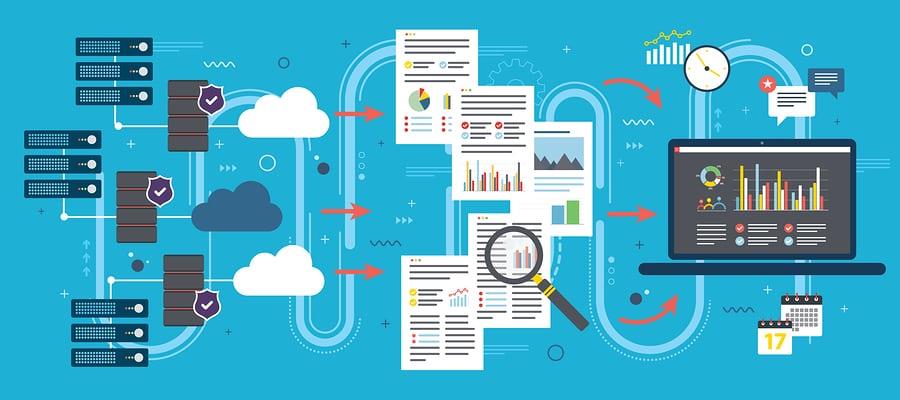
But market intelligence alone is insufficient for survival. Startups must be ready to execute a bold, data-driven strategy. The following three strategic points offer a clear pathway out of the generic IT quagmire, enabling startups to drastically lower CAC, shorten sales cycles, and build a defensible, differentiated business model.
1: The Leap to Vertical SaaS and Industry Specialization
The generic IT solution is dead. The core problem of high CAC is often a function of a broad, horizontal product offering that attempts to be relevant to everyone, resulting in true relevance to no one. Sales conversations become time-consuming educational journeys, convincing the buyer that the technology could work for them, rather than demonstrating how it already solves their specific, regulatory, or operational pain points.
The first essential pivot is to move from a horizontal product to a Vertical SaaS (Software as a Service) model, focusing on deeply specialized industry applications.
Alternative Customer Segments and Applications:
- Pivot Target: Shift focus from the broad "Enterprise IT" buyer (CIO, CTO across all industries) to the mid-sized, highly regulated enterprise in specific verticals, such as RegTech for Regional Banking, HealthTech for Integrated Clinic Networks, or Supply Chain SaaS for Cold Storage Logistics.
- Product Approach: The solution must be opinionated, meaning it is purpose-built to conform to the regulatory and workflow demands of the chosen vertical. For example, a generalized data governance tool pivots to an automated HIPAA/GDPR compliance suite for healthcare providers.
- The Outcome: By targeting a specific industry, the message is instantly more resonant. The buyer, whether a Compliance Officer or a Chief Medical Information Officer, immediately recognizes the value. This specialization leads to highly targeted marketing (lower CAC), and the hyper-relevance of the solution dramatically reduces the time spent in the discovery and negotiation phases (shorter sales cycles). Furthermore, it creates a powerful network effect within the niche industry, turning customers into advocates.
2: From Closed Product to Open Platform/Ecosystem Enablement
Many Enterprise IT Solutions startups are founded by engineers obsessed with the product's feature set. They build a powerful, proprietary, and critically, closed system. Their sales strategy relies on a small, expensive, direct sales team to evangelize the product one enterprise at a time. This model is slow, capped, and extremely expensive.
The second strategic pivot addresses this by fundamentally altering the product's architecture and distribution model, shifting from a product-first mentality to a Platform and Ecosystem-Enablement approach.
Alternative Product Approaches and Distribution:
- Pivot Target: The new primary customer is not just the end-user enterprise, but the System Integrator (SI), Managed Service Provider (MSP), or independent B2B developer.
- Product Approach: The proprietary software must be re-architected as an API-first platform. The core technology (e.g., AI/ML engine, low-code workflow builder, secure data fabric) is exposed via robust, well-documented APIs and SDKs. The startup's revenue is generated not only from direct sales but increasingly from API consumption and partnership tiers.
- New Sales Channel: This pivot weaponizes the channel. Instead of the startup spending millions on a direct sales force, they empower thousands of established SIs (like Accenture, Deloitte, or regional boutique firms) to build custom solutions for their clients on top of the startup's platform. These partners effectively become an outsourced, highly motivated, commission-only sales team.
- The Outcome: This strategy drastically reduces the burden on the internal sales team, turning a product-centric sales cycle into a channel-centric scale cycle. It shortens the time-to-market for tailored enterprise solutions and rapidly builds market penetration across multiple sectors simultaneously, without the associated increase in overhead or CAC. It redefines the startup's value proposition from a vendor to an enabler of digital transformation.
3: Adopting a Usage-Based/Freemium Model for the Mid-Market
The classic enterprise sales model is characterized by high-touch engagement, extensive proof-of-concept (POC) deployments, and complex, year-long contracts. While necessary for the largest Fortune 500 accounts, this process is pure overhead when trying to penetrate the massive, yet historically underserved, mid-market (companies with $50 million to $500 million in annual revenue). The cost of a human-driven sales process often outweighs the lifetime value of a mid-market customer.
The final strategic pivot is to unlock the mid-market by adopting a self-serve, low-friction, usage-based, or freemium model.
Alternative Customer Segments and Product Approaches:
- Pivot Target: The focus shifts from the CTO of a Global 2000 company to the VP of Operations or IT Director of the regional mid-market firm. These buyers need solutions that are powerful but do not require heavy, consultant-led implementation.
- Product Approach: Create a streamlined, simplified version of the core enterprise product—the "Lite" or "Pro" tier—that can be onboarded, configured, and used entirely without human interaction. Pricing must be transparent, granular, and tied directly to a tangible value metric (usage-based pricing), such as data processed, seats deployed, or API calls made.
- The Goal: The aim is to eliminate the initial sales friction entirely. The freemium offering or a low-cost, pay-as-you-go entry point allows the product to "land and expand." The user gains value immediately, and the upgrade to the full-feature (enterprise) version becomes an operational necessity driven by internal usage, not an external sales pitch. This effectively turns a portion of the product into a low-cost customer acquisition engine.
- The Outcome: This pivot dramatically lowers the blended CAC across the entire customer base. The self-serve model handles the long tail of smaller customers efficiently, freeing the expensive direct sales team to focus exclusively on the highest-value, largest enterprise accounts where the high-touch process is justified. It provides a crucial, low-barrier entry point into the market, accelerating adoption and providing valuable feedback loops.
Empower Your Pivot with Unrivaled Market Intelligence
These three strategic pivot points—Vertical Specialization, Platform Enablement, and Mid-Market Freemium—are not mere suggestions; they are the proven models being deployed by the fastest-growing B2B Tech firms today. Executing them requires not only conviction but also access to the most current, granular market data.
The Enterprise IT Solutions eBook is the indispensable resource for this undertaking.
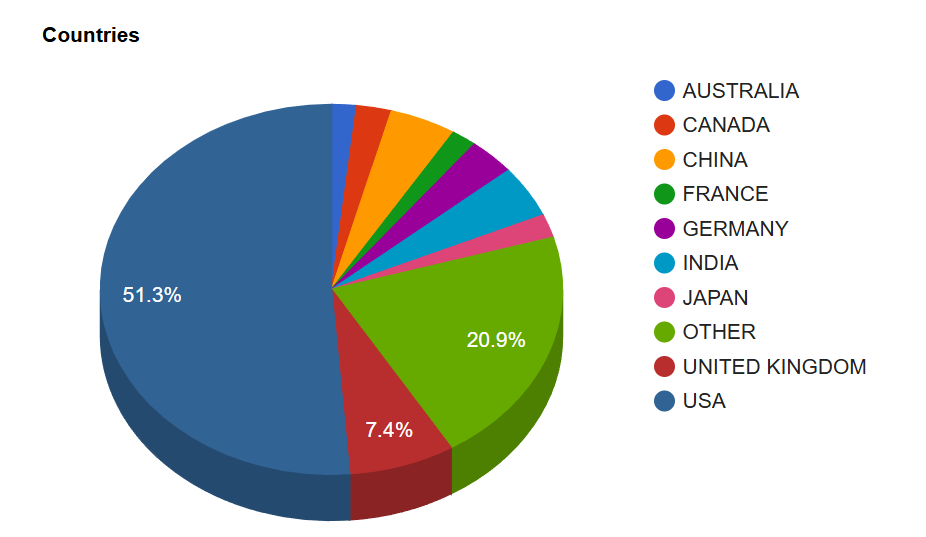
It provides listings on thousands of sector-leading companies, allowing you to quickly analyze competitive landscapes and potential partners. Need to understand where the market is headed? The eBook tracks current press releases and major announcements. Planning a talent acquisition strategy for a new market? Analyze current employment and job listings across different countries. Targeting a specific regional expansion? Access essential country market data. This is a comprehensive, continuously updated directory designed to save hundreds of hours of research.
Stop competing on features and start competing on strategy. Leverage the critical insights within this guide to execute your strategic pivot and dominate your niche in the Enterprise IT Solutions sector.
Download the Essential Enterprise IT Solutions eBook and Digital Directory today!
Explore the full collection
Browse our full collection of e-Books and our special offer, or take a look at the recent press releases about our latest ebooks.