
For Immediate Release · Gloucester MA, USA — February 2, 2026
Computer Review, a leading provider of technology market intelligence, has announced the release of its latest digital directory-based eBook, “Financial Technology.” As the global fintech market reaches a critical inflection point characterized by increased regulatory scrutiny and a shift from growth-at-all-costs to sustainable profitability, this comprehensive database serves as a vital strategic resource. The directory provides founders, investors, and enterprise decision-makers with a granular view of thousands of financial technology companies worldwide, offering the competitive intelligence necessary to navigate an increasingly crowded ecosystem.

The eBook is available for professional review and acquisition here.
The Strategic Challenge: Overcoming the "Commoditization Trap" in Fintech
The fintech industry is currently grappling with a paradox of maturity. While venture capital continues to flow into the sector, the barrier to entry for basic financial services—such as digital wallets, neobanking, and payment processing— has dropped significantly. This has led to a "commoditization trap" where startups face rising customer acquisition costs (CAC) and thinning margins due to intense market saturation.
For many FinTech startups, the traditional path of horizontal expansion is no longer viable. Success in the current climate requires a shift from broad-market appeals to specialized, high-moat strategies. To survive this consolidation phase, firms must move beyond "disruption" for its own sake and focus on structural integration within the global financial technology ecosystem.
Three Strategic Pivot Points for the Modern Fintech Firm
To address these market pressures, Computer Review identifies three critical pivot points where market intelligence and data-driven decision-making are paramount.
01Vertical Integration into B2B Niche Segments
The Necessity: As the B2C (Business-to-Consumer) market becomes saturated with dozens of identical banking apps, the most significant opportunity lies in "Vertical SaaS-plus-Fintech." This involves embedding financial services into specific industry workflows—such as construction, healthcare, or logistics—where legacy systems still dominate.
Execution: Startups can validate this pivot by identifying industries with high transaction volumes but low digital penetration. Execution requires building specialized underwriting models or payment flows tailored to the specific regulatory and operational needs of that niche.
The Role of the Directory: Using the Computer Review Financial Technology database, strategists can perform deep-dive market research to identify existing players in these niches. By analyzing company press releases and executive profiles within the directory, founders can spot gaps in current service offerings and identify potential "white space" in regional markets that are currently underserved by specialized providers.
02The Shift from “Disruption” to Infrastructure-as-a-Service (IaaS)
The Necessity: Many FinTech startups are finding that their greatest asset is not their customer base, but the proprietary technology stack they built to serve that base. In a high-interest-rate environment, selling "shovels" (the infrastructure) to established banks is often more profitable and scalable than competing with them for deposits.
Execution: This pivot involves unbundling the core product—be it a KYC (Know Your Customer) engine, a fraud detection algorithm, or a cross-border ledger—and offering it as an API-first solution to legacy institutions and other startups.
The Role of the Directory: The fintech industry directory acts as a roadmap for partnership discovery. It allows IaaS-focused firms to map the global fintech market and identify legacy enterprises or mid-tier regional banks that lack internal innovation. Access to employment and hiring insights within the eBook helps providers understand which companies are currently scaling their engineering teams, signaling a readiness to integrate new infrastructure technologies.
03Regional Localization and Regulatory Arbitrage
The Necessity: While Silicon Valley and London remain hubs, the most explosive growth in the financial technology ecosystem is occurring in emerging markets across Southeast Asia, Latin America, and Africa. However, these markets require deep localization that global incumbents often struggle to provide.
Execution: Startups should look toward "Regulatory Arbitrage" or "Localization"—taking a proven business model from a mature market and adapting it to the specific regulatory, cultural, and technical requirements of a high-growth region.
The Role of the Directory: The global fintech market is too vast to navigate without structured data. The Computer Review eBook provides coverage across multiple countries, allowing investors and founders to conduct competitive intelligence on local incumbents. By reviewing the market presence and executive leadership of regional players listed in the directory, firms can identify potential acquisition targets or local partners to facilitate a smoother market entry.
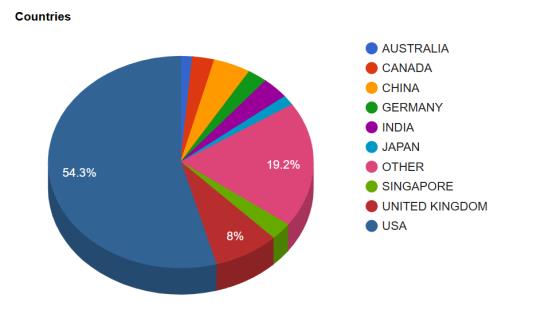
Take a look at our free tech chart showing the companies working in FinTech sector across the globe.
A Multidimensional Database for Competitive Intelligence
The “Financial Technology” eBook is more than a list; it is a digital ecosystem map. Each listing is meticulously curated to include:
- Comprehensive Company Profiles: Detailed insights into thousands of Financial Technology companies.
- Executive Intelligence: Profiles of key decision-makers to facilitate high-level networking and partnership outreach.
- Operational Transparency: Data on employment, hiring trends, and organizational growth.
- Historical Context: Access to company press releases that track the evolution of product lines and strategic pivots over time.
For an industry where information asymmetry can mean the difference between a successful exit and a failed round, this directory provides the transparency required for rigorous market validation.
Conclusion: Why Market Intelligence is the New Capital
As the fintech sector matures, the value of raw capital is being surpassed by the value of actionable intelligence. Founders, investors, and enterprise strategists can no longer rely on anecdotal evidence or fragmented web searches to guide their multi-million dollar decisions.
Digital directories like Computer Review’s “Financial Technology” eBook have become essential tools because they provide a consolidated, verified, and global perspective on a fragmented industry. In an era where the financial technology ecosystem is being rewritten by new regulations and shifting consumer demands, having a definitive fintech company database is a prerequisite for identifying the partners of tomorrow and the competitors of today. Whether for strategic research, hiring benchmarks, or competitive mapping, this directory serves as the foundational architecture for informed leadership in the global fintech arena.
Explore the full collection
Browse our full collection of e-Books and our special offer, or take a look at the recent press releases about our latest ebooks.