
For Immediate Release · Gloucester MA, USA — May 20, 2026
Global tech markets are witnessing a paradox: while information is more abundant than ever, the systems designed to manage it—the Library Automation sector—are hitting a strategic wall. As the industry faces a pivot point, Computer Review’s latest market intelligence release, Library Automation, provides the roadmap for a fragmented global landscape.

The global Library Automation industry is currently navigating a period of "invisible friction." For decades, the sector was defined by a handful of legacy Integrated Library Systems (ILS). Today, however, the market is suffering from extreme fragmentation and a lack of clear differentiation. Startups and enterprise strategists are finding that while the demand for digitized knowledge is soaring, the go-to-market (GTM) strategies of the past are no longer yielding results.
The challenge is not a lack of technology, but a lack of visibility. With thousands of global Library Automation companies operating across disparate regional markets, from South Asia’s burgeoning academic tech scene to the mature, compliance-heavy markets of the EU and North America, the industry has become a "black box" for investors and founders alike.
To address this information asymmetry, Computer Review has released a comprehensive digital directory-based ebook titled Library Automation. Far from a static PDF, this resource functions as a live diagnostic tool for the sector, cataloging thousands of companies, executive leadership shifts, and regional expansion signals. It arrives at a moment when "gut-feeling" expansion is being replaced by data-driven competitive intelligence.
The Visibility Crisis in Knowledge Management
For a startup founder or a private equity investor, the primary hurdle today is the "overcrowded middle." The market is saturated with mid-tier providers offering similar cloud-based management tools. Without a granular global Library Automation companies list, identifying who is actually hiring, who is issuing aggressive press releases in new territories, and who is quietly pivoting toward AI-integrated metadata management is nearly impossible.
The Library Automation ebook bridges this gap by providing a longitudinal view of the market. By aggregating visibility into company press releases and executive movements, it allows strategists to track Library Automation industry hiring and expansion trends in real-time. This level of market transparency is essential for partnership discovery—helping smaller players identify regional distributors or technical collaborators who possess the local regulatory knowledge necessary for entry into foreign markets.
Strategic Pivots: Navigating the New Library Economy
As the traditional ILS market matures, growth-stage companies must look toward underserved segments. Based on the market footprint data evidenced in Computer Review’s directory, three strategic pivots have emerged as the primary drivers of future ROI.
01From "Generalist ILS" to "Specialized Research Intelligence"
The most significant shift is occurring in the transition from managing books to managing intellectual property. While public libraries are well-served, corporate R&D departments and specialized medical libraries are currently underserved.
- Why it matters now: Corporations are struggling to organize internal data for AI training. A Library Automation startup that pivots to "Internal Knowledge Graphs" can command higher margins than one fighting for a municipal contract.
- Observable Behavior: Computer Review’s data shows a spike in emerging Library Automation startups worldwide that are rebranding as "Knowledge Management" or "Research Operations" (ResOps) platforms.
- Validation: By using the directory to filter companies by "market footprint," strategists can identify which competitors have successfully entered the corporate sector and what executive talent they are poaching to lead those divisions.
02Regional Localization and "Sovereign Data" Models
The era of the "one-size-fits-all" global cloud platform is ending due to data residency laws. Growth-stage companies are finding success by focusing on hyper-regionalized compliance.
- Why it matters now: Governments in the Middle East and Southeast Asia are investing heavily in educational infrastructure but require data to stay within national borders.
- Observable Behavior: There is a notable trend in Library Automation market trends by region showing localized players in the GCC and ASEAN regions outperforming Western incumbents who refuse to localize their server architecture.
- Validation: The Library Automation ebook’s coverage across multiple countries allows investors to spot "regional champions" before they reach global scale, providing a prime list of targets for acquisition or partnership.
03The "API-First" Ecosystem Play
Rather than trying to be the "operating system" of the library, new winners are becoming the "connective tissue." This involves building lightweight, API-driven tools that plug into existing legacy systems to provide modern UX or AI-driven search capabilities.
- Why it matters now: Libraries lack the budget to "rip and replace" legacy systems. A "plugin" model lowers the barrier to entry and speeds up the sales cycle.
- Observable Behavior: Analysis of recent company press releases within the directory indicates a move away from "all-in-one" marketing toward "interoperability" and "modular integration."
- Validation: Founders can use the directory to conduct competitive analysis and partnership discovery, finding legacy providers whose aging infrastructure is ripe for a modern API-front-end partnership.
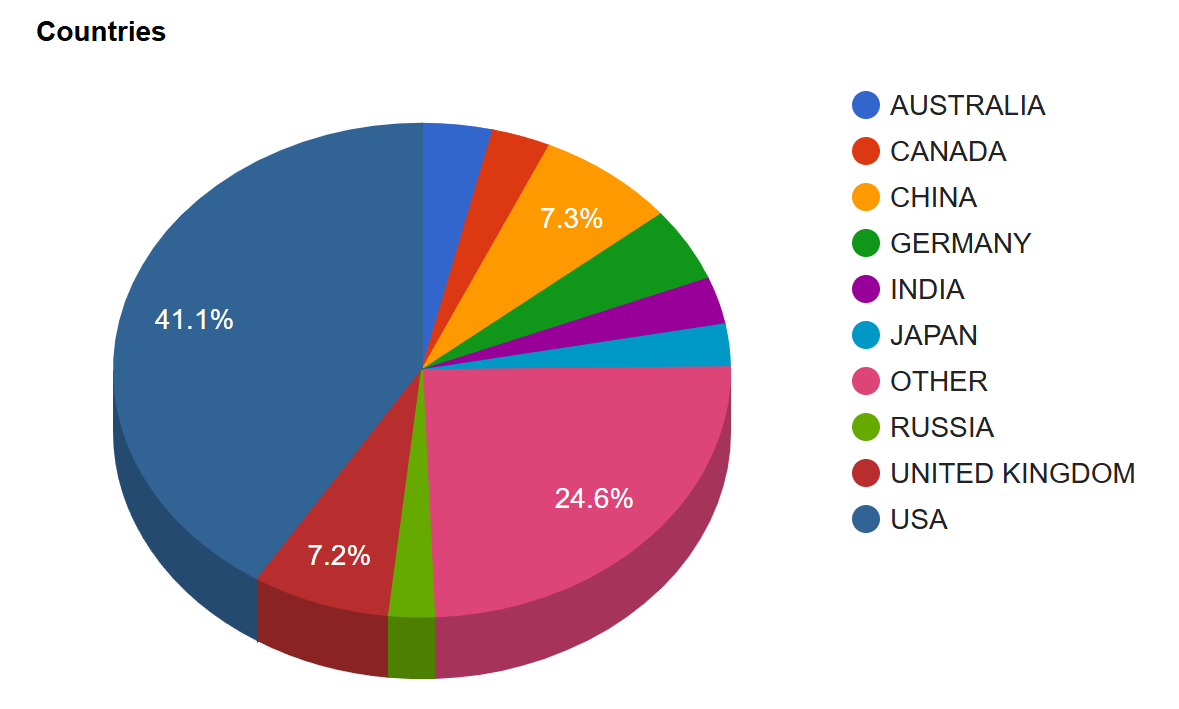
This free tech chart provides you an insight into percentage of companies working from different countries all across the globe.
Intelligence as a Competitive Advantage
In a market where the "signal-to-noise" ratio is increasingly skewed, the ability to map the landscape is a prerequisite for survival. For enterprise strategists, the question is no longer "What can the technology do?" but "Where is the market moving?"
Understanding how Library Automation startups find partners and customers requires more than a Google search; it requires a structured database of the players involved. The Library Automation ebook serves as a foundational layer for this research, providing the executive contacts and hiring signals that indicate where the next "land grab" will occur.
As we move toward the second half of the decade, the Library Automation sector will likely bifurcate: those who continue to compete on features in a crowded market, and those who use market intelligence to find the "blue oceans" of specialized research and regionalized infrastructure.
For those looking to lead that transition, the data is now available. The Library Automation digital directory is currently accessible via Computer Review, offering the most comprehensive look at the global state of knowledge management infrastructure today.
Explore the full collection
Browse our full collection of e-Books and our special offer, or take a look at the recent press releases about our latest ebooks.