
For Immediate Release · Gloucester MA, USA — August 21, 2026
The digital infrastructure powering modern global commerce, industrial automation, and enterprise technology is undergoing its most profound structural shift in decades. As edge computing expands, artificial intelligence moves from cloud data centers to localized hardware, and zero-trust security architecture becomes a baseline requirement, the demand for sophisticated, resilient operating systems software has reached an unprecedented peak.
To bridge the growing intelligence gap in this rapidly accelerating market, technology media and market research authority Computer Review has published its comprehensive digital intelligence resource: Operating Systems Software: The Global Directory. Designed for enterprise leaders, tech investors, procurement strategists, and researchers across the United States and globally, this publication delivers structured data, automated research models, and actionable market mapping across the entire software ecosystem.
01Industry Analysis: The Unprecedented Disruption in OS Architecture
The operating systems software market is no longer defined strictly by desktop platforms and enterprise server distributions. Today, the sector spans specialized real-time operating systems (RTOS) for industrial Internet of Things (IoT), container-optimized hypervisors, AI-native microkernels, embedded automotive stacks, and sovereign cloud platforms.
| THE MODERN OS ECOSYSTEM ARCHITECTURE | ||
|---|---|---|
| Cloud & Server OS | Edge & Real-Time (RTOS) | Container & Microkernel |
| Enterprise Linux | Embedded Robotics | Immutable OS |
| Virtualization | Automotive Platforms | AI Hardware Accelerators |
Several macroeconomic and technological forces are converging to reshape how organizations build, deploy, and license base-level system software:
- The Silicon-Software Decoupling: Hardware architectures are diversifying beyond legacy x86 frameworks to ARM, RISC-V, and custom ASIC silicon. Operating systems must now provide ultra-flexible abstraction layers capable of driving heterogeneous compute environments without sacrificing throughput.
- Autonomous & Embedded Systems Expansion: From mission-critical robotics to advanced driver-assistance systems (ADAS), low-latency, deterministic operating systems are replacing general-purpose kernels in high-stakes operational environments.
- Zero-Trust Operating Paradigms: High-profile supply chain vulnerabilities have forced a complete rethinking of kernel security. Enterprise buyers are shifting away from monolithic architectures toward immutable, memory-safe operating systems designed to isolate workloads dynamically.
As organizations adapt to these shifts, tech leaders face a double-edged sword: unprecedented technical capability matched by unprecedented market complexity.
02The Fragmentation Dilemma: Why Finding Market Signals Is Getting Harder
Despite the critical importance of operating systems software in the modern tech stack, sourcing trustworthy, comprehensive data on vendors, emerging startups, and specialized solution providers remains deeply fragmented.
For decision-makers navigating the US market, discovering niche solution providers—such as an embedded RTOS vendor compliant with specific aerospace safety standards, or a specialized microkernel developer optimized for distributed AI inference—often requires hundreds of hours of manual research.
This intelligence bottleneck creates clear business risks:
- Procurement Delays: Enterprise architecture teams frequently spend months auditing vendors due to a lack of centralized market visibility.
- Duplicative R&D: Technology companies inadvertently build custom internal operating tools because they are unaware that off-the-shelf, open-source, or commercial alternatives already exist.
- Investment Blind Spots: Venture capital firms and private equity groups struggle to identify high-growth, early-stage OS innovators hidden beneath broad enterprise software categories.
03Introducing the Operating Systems Software Directory by Computer Review
To resolve this market fragmentation, Computer Review has launched its new digital ebook directory, providing a single source of truth for the global market.
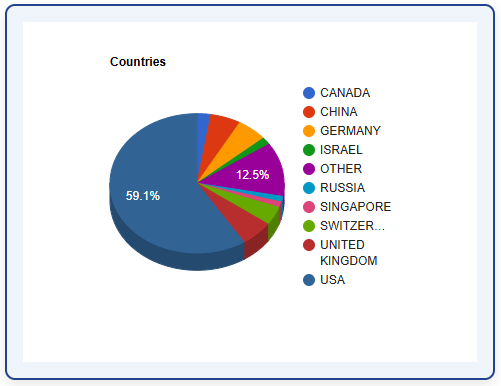
The Operating Systems Software ebook serves as an automated, globally indexed intelligence platform built to connect technology buyers, developers, investors, and service providers. Moving beyond static corporate lists, the directory organizes the global market into clear, actionable categories, covering startups, hyper-scalers, open-source foundations, consultants, and hardware-integration specialists. Take a look at our free tech chart:
Key Directory Features
- Automated Data Updates: Structured to leverage real-time corporate indexing and market intelligence pipelines, ensuring vendor classifications reflect the current market landscape.
- Global Footprint, US Focus: Deep coverage of established software giants alongside agile international startups expanding into the North American enterprise ecosystem.
- Integrated Free Tech Chart: Readers receive an exclusive visual taxonomy and competitive matrix mapping major OS platforms against performance metrics, licensing models, hardware compatibility, and security certifications.
04Strategic Value Across the Enterprise Spectrum
The Operating Systems Software directory is built to deliver immediate utility to diverse stakeholders throughout the technology ecosystem:
| Target Audience | Primary Value Proposition | Practical Application |
|---|---|---|
| Enterprise Decision-Makers & Procurement | Shortens vendor evaluation cycles | Identify, cross-reference, and audit specialized OS vendors based on compliance, security, and hardware support. |
| Startups & Technology Innovators | Accelerates go-to-market visibility | Benchmark product capabilities against established global competitors and identify potential distribution partners. |
| Investors & M&A Advisors | Streamlines deal sourcing | Uncover non-obvious acquisition targets and emerging tech pioneers in niche sub-sectors like microkernels and RTOS. |
| Researchers & Academia | Provides macro-level market taxonomy | Analyze structural shifts in open-source adoption, proprietary licensing strategies, and ecosystem consolidation. |
05Three Strategic Pivot Points for Business Leaders in Operating Systems
To help executives navigate the technological shifts outlined in the directory, Computer Review highlights three strategic pivot points transforming the operating systems software sector today:
Pivot Point 1: Transitioning to Immutable and Memory-Safe System Architectures
- The Opportunity: Legacy operating systems built on C/C++ remain susceptible to memory corruption vulnerabilities, which account for a major share of critical zero-day exploits.
- Strategic Insight: Market demand is pivoting toward memory-safe operating system components (frequently engineered in Rust) and immutable file systems that prevent runtime modification of core kernel binaries.
- Practical Implication: Enterprise procurement officers should prioritize OS vendors that offer memory-safe architectures and container-optimized immutable builds to drastically lower corporate cybersecurity liability.
Pivot Point 2: Embedded AI at the OS Kernel and Middleware Layer
- The Opportunity: Centralized cloud AI inference suffers from latency, bandwidth costs, and privacy concerns.
- Strategic Insight: The operating system is transforming from a passive resource manager into an active AI broker. Modern operating systems are incorporating native machine learning scheduling layers directly above the hardware abstraction layer (HAL) to manage localized neural processing units (NPUs).
- Practical Implication: Software vendors operating in mobile, industrial, and IoT spaces must adapt their system software to manage heterogeneous NPU, GPU, and CPU workloads seamlessly out of the box.
Pivot Point 3: Capitalizing on the Open-Source Silicon Movement (RISC-V)
- The Opportunity: Proprietary chip designs face supply chain frictions and rising licensing costs, spurring massive global investment in open-source RISC-V hardware architectures.
- Strategic Insight: Operating system software must maintain fluid compatibility across emerging open silicon platforms. Vendors who provide turnkey, highly optimized OS distributions for RISC-V stand to capture massive enterprise market share in the coming decade.
- Practical Implication: Hardware and software integration consultants must reposition their capabilities around cross-platform compile tools and custom kernel builds optimized for non-x86 architectures.
06The 3-to-5 Year Horizon: Where Operating Systems Are Headed
Looking toward the end of the decade, the line between operating systems, hypervisors, and distributed cloud orchestrators will continue to blur. We expect the market to prioritize three major vectors:
- Autonomous Edge Management: OS stacks will incorporate self-healing mechanisms driven by predictive analytics, enabling remote devices in healthcare, aerospace, and energy to patch vulnerabilities and reconfigure kernels without operational downtime.
- Unified Hybrid Compute: Future enterprise operating systems will abstract geographic data center boundaries entirely, allowing application workloads to migrate natively between localized edge devices, sovereign private clouds, and public cloud providers.
- Sustainable Compute Metrics: Environmental accountability will drive operating systems to incorporate real-time energy orchestration algorithms, dynamically scaling back processor clock speeds and shifting workloads to green energy nodes at the kernel level.
07Access Market Intelligence Today
In an environment where market intelligence directly influences competitive advantage, relying on fragmented search results and outdated vendor lists is no longer viable. Take a look at the available monthly plans to purchase our ebook. We are offering both monthly and annual plans for our valuable customers.
The Operating Systems Software ebook directory from Computer Review serves as a comprehensive tool to streamline sourcing, inform investment strategies, and clarify complex technology markets. Complete with the integrated free tech chart, this publication equips technology leaders with the insights needed to navigate the evolving system software landscape.
To learn more about the directory or to secure your copy, visit the official Computer Review digital repository.
Explore the full collection
Browse our full collection of e-Books and our special offer, or take a look at the recent press releases about our latest ebooks.