
For Immediate Release · Gloucester MA, USA — September 1, 2026
Modern enterprise operations are undergoing a structural transformation. Driven by systemic talent shortages in domestic markets, rapid advances in cloud infrastructure, and the non-negotiable imperative of enterprise digital transformation, corporate leaders across the United States are fundamentally rethinking how they build, scale, and maintain organizational capabilities. Sourcing operational workflows across international borders is no longer a purely tactical cost-containment measure; it has evolved into a strategic driver of global competitiveness.
Responding to this rapid industry evolution, leading tech intelligence publication Computer Review has announced the official release of its comprehensive digital directory and market strategy guide: Outsourcing Worldwide.

Macro-Market Dynamics: The Evolution of Global Sourcing
The global business landscape has moved past the traditional business process outsourcing (BPO) model characterized merely by transactional call centers and basic back-office handling. Today’s global sourcing paradigm encompasses high-value Information Technology Outsourcing (ITO), Knowledge Process Outsourcing (KPO), specialized offshore software development, and artificial intelligence model refinement. U.S. enterprise decision-makers are increasingly looking toward global innovation hubs to secure specialized technical expertise—ranging from full-stack engineering and cybersecurity architecture to machine learning data annotation and enterprise resource planning (ERP) integration.
However, as the geographic footprint of digital service providers expands across North America, Latin America, Eastern Europe, South Asia, and Southeast Asia, the global operational ecosystem has become highly fragmented. Enterprise buyers face an unprecedented market shift where agility and rapid technology adoption dictate success, yet finding verified, reliable partners across international jurisdictions remains a complex, opaque challenge.
Key Industry Insight: Global outsourcing expenditure is projected to expand significantly as organizations integrate artificial intelligence, automated workflows, and hybrid remote delivery models into their core operations. Reliable market intelligence is now the key differentiator between successful enterprise scaling and costly vendor misalignments.
The Enterprise Dilemma: Navigating Vendor Fragmentation and Market Noise
Despite an abundance of online information, enterprise procurement teams, technology executives, venture-backed startups, and strategic consultants face a persistent information crisis. The vendor ecosystem is saturated with generic pitch decks, aggressive marketing claims, and unverified reviews. Discovering legitimate software vendors, qualified solution providers, specialized consultancies, and emerging tech innovators often requires months of costly, manual research.
For U.S. decision-makers, evaluating potential service partners involves navigating complex risk profiles: assessing compliance with international data privacy standards (such as GDPR and HIPAA), validating cybersecurity protocols, evaluating cultural alignment, and understanding localized labor economics. Without a centralized, objective, and structured repository of vendor intelligence, organizations risk misallocating operational capital, delaying project timelines, and incurring significant opportunity costs.
Introducing the Outsourcing Worldwide Digital Directory
To solve this enterprise intelligence gap, Computer Review has engineered the Outsourcing Worldwide directory—a meticulously organized, automated digital reference designed specifically for decision-makers seeking clarity in global sourcing. Built on an intelligent data aggregation framework, this resource acts as a vital bridge between global service providers and capital-deploying organizations.
The directory consolidates exhaustive listings of global companies, fast-growing technology startups, established IT solution providers, niche software vendors, management consultancies, specialized hardware manufacturers, venture capital investors, and industrial innovators. Organized logically by domain expertise, geographic specialization, delivery capabilities, and technological competencies, the directory converts overwhelming market noise into actionable intelligence.
A core highlight of this publication is the inclusion of an exclusive, interactive, automated free tech chart. This embedded analytical tool allows users to map vendor capabilities, analyze tech stack compatibility, evaluate service delivery models, and benchmark providers across global regions in real time, dramatically streamlining the vendor shortlisting process.
Multi-Sector Utility: Strategic Value Across the Enterprise Spectrum
The Outsourcing Worldwide directory is designed to serve diverse stakeholder groups within the U.S. and global business ecosystem:
- Enterprise Executives & Procurement Leaders: Accelerate RFP processes, lower vendor acquisition costs, validate service provider stability, and build resilient multi-vendor sourcing strategies.
- Startups & Scale-ups: Locate agile engineering teams, nearshore development talent, and cost-effective operations partners to extend runway without sacrificing product delivery speed.
- Investors & Venture Capitalists: Conduct thorough competitive landscape analysis, map market saturation, discover emerging tech hubs, and identify promising service providers for strategic investments.
- Technology Consultants & Advisors: Access a verified intelligence repository to advise clients on global delivery models, capability benchmarking, and partner selection.
- Academic Researchers & Market Analysts: Analyze structural trends, labor movement, tech adoption rates, and economic shifts across global sourcing corridors.
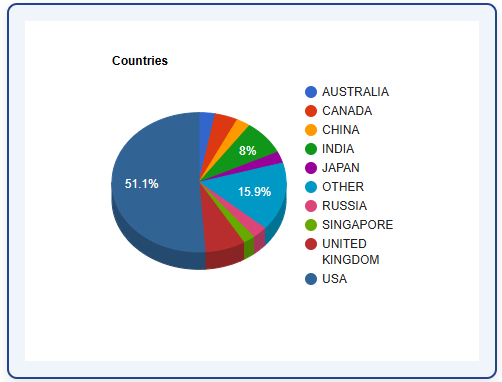
Take a look at our free tech chart:
Three Strategic Pivot Points for Global Sourcing Operations
To help organizations extract maximum value from their global operational investments, Computer Review highlights three critical strategic pivots that modern businesses must integrate into their sourcing frameworks:
01AI-Driven Automation & Hybrid Service Delivery
- The Opportunity/Challenge: Traditional labor-arbitrage outsourcing models are yielding diminishing returns. Clients now expect service providers to deliver productivity gains through technology integration rather than headcount expansion alone.
- Strategic Insight: Enterprise buyers must prioritize vendors that embed artificial intelligence, robotic process automation (RPA), and automated testing directly into their service delivery pipelines. Moving toward a hybrid "human-plus-AI" model enhances delivery speed and operational efficiency.
- Practical Implication: Procurement teams should leverage directory metrics to filter for vendors possessing certified AI integration capabilities and automated technology frameworks, ensuring long-term operational resilience.
02Nearshore Diversification & Regionalized Supply Chains
- The Opportunity/Challenge: High latency, extreme time-zone friction, and geopolitical instability have highlighted the vulnerabilities of relying exclusively on single-region offshore sourcing hubs.
- Strategic Insight: Progressive U.S. enterprises are pivoting toward a balanced "poly-sourcing" architecture, combining traditional offshore hubs with nearshore delivery centers in regions such as Latin America and Eastern Europe for real-time collaboration.
- Practical Implication: The Outsourcing Worldwide directory's structured geographic taxonomy allows organizations to quickly balance their global footprint, establishing regional centers of excellence that minimize operational downtime.
03Data-Centric Security & Zero-Trust Vendor Alignment
- The Opportunity/Challenge: Expanding third-party access to corporate networks creates significant cybersecurity risks and data privacy liabilities if remote vendors lack rigorous security protocols.
- Strategic Insight: Organizations must transition from periodic vendor compliance checks to continuous, zero-trust security alignments. Vendor selection should prioritize providers with robust infrastructure, standardized certifications, and automated compliance auditing.
- Practical Implication: Utilizing categorized directory intelligence enables enterprise risk officers to evaluate service providers based on verified security compliance frameworks before initiating formal discussions.
The Future Outlook: The Next 3 to 5 Years in Global Sourcing
Looking toward the horizon, the global outsourcing sector will be defined by hyper-specialization, ethical AI implementation, and seamless digital integration. As cloud-native architectures become universal, geographic boundaries will continue to dissolve, giving rise to truly borderless digital enterprises. Organizations that succeed over the next decade will not simply hire vendor capacity; they will build dynamic, hyper-automated ecosystem partnerships.
Access to transparent, structured, and continuously updated market data will define market leadership. Companies equipped with clear operational intelligence will navigate global disruptions with speed, capitalizing on emerging tech talent before competitors even recognize the opportunity.
Call to Action: Access Global Market Intelligence Today
Unlock structured global vendor data, detailed service taxonomies, and the exclusive automated free tech chart today. Gain the intelligence needed to optimize your global delivery strategy.
Download the EBook Directory now at: www.computerreview.com
Explore the full collection
Browse our full collection of e-Books and our special offer, or take a look at the recent press releases about our latest ebooks.