
For Immediate Release · Gloucester MA, USA — September 15, 2026
Modern enterprise operations are increasingly defined by a single imperative: the ability to convert chaotic streams of raw information into proactive business intelligence. As the global predictive analytics market accelerates past traditional data processing frameworks, enterprise decision-makers, venture capitalists, and procurement specialists face an unprecedented structural challenge. The market is evolving faster than traditional research firms can map it.
To bridge this critical intelligence gap, Computer Review has published its high-impact digital market directory, Predictive Big Data Analytics. Designed as an automated, globally synchronized market intelligence resource, the directory indexes the entire ecosystem— from deep-tech software vendors and specialized machine learning consultants to early-stage innovators, institutional investors, and hardware manufacturers driving real-time edge computing.

The Predictive Intelligence Shift: Market Dynamics and Enterprise Realities
The global transition from descriptive and diagnostic data models to predictive and prescriptive frameworks represents a foundational shift in competitive strategy. Organizations no longer seek to merely understand past performance; they require automated systems capable of forecasting customer churn, optimizing supply chain bottlenecks, detecting fraudulent financial transactions, and anticipating equipment failures days before they occur.
This transition is fueled by the convergence of cloud-native data warehouses, high-throughput streaming architectures, and advanced predictive AI models. However, rapid technological convergence creates enterprise friction. Legacy infrastructure struggles to integrate real-time predictive pipelines, and business leaders must continuously evaluate hundreds of emerging software tools, proprietary algorithms, and niche integration partners.
As algorithmic decision-making moves into core business functions, market access depends on clarity. Organizations that successfully navigate this hyper-fragmented vendor ecosystem gain immediate operational advantages, reducing operational risk and accelerating time-to-value for artificial intelligence initiatives.
The Market Fragmentation Dilemma: Why Curated Intelligence Matters
Despite the abundance of digital information, finding verified, actionable intelligence on advanced data analytics providers remains surprisingly difficult. The modern predictive analytics sector suffers from severe market fragmentation, noise, and information decay.
Search engine results are routinely overwhelmed by aggressive content marketing, optimized landing pages, and surface-level aggregator sites that fail to distinguish between established enterprise software platforms and early-stage concepts. Meanwhile, traditional market research reports often cost thousands of dollars, take months to publish, and become outdated the moment they hit the press.
This lack of centralized, structured directory data creates significant operational risks:
- Procurement teams waste hundreds of research hours vetting vendors that lack enterprise-grade compliance or scalability.
- Investors and M&A analysts overlook high-potential startups operating outside traditional Silicon Valley networks.
- Technology consultants and enterprise architects struggle to track niche service providers offering specialized industry-specific model implementations.
- Startups and mid-market innovators find it difficult to gain visibility alongside legacy tech conglomerates with massive marketing budgets.
Without an automated, centralized directory, industry stakeholders operate with incomplete information, leading to misallocated capital, prolonged procurement cycles, and missed strategic partnerships.
Bridging the Gap: The Predictive Big Data Analytics Directory
Designed directly to solve this discoverability crisis, the Predictive Big Data Analytics digital ebook directory offers a structured, global map of the industry. Published by Computer Review, this intelligence resource aggregates verified operational profiles, service classifications, and structural data across the entire analytics spectrum.
Rather than offering static, unverified lists, the directory categorizes organizations across critical operational domains, including automated machine learning (AutoML) platforms, real-time data streaming engines, predictive risk modeling software, customer intelligence systems, and specialized IoT analytics infrastructure.
Predictive Big Data Analytics: Global Ecosystem Map
| Data infrastructure & engines | Model development & algorithms |
|---|---|
| High-Throughput Streaming | Automated Machine Learning (AutoML) |
| Cloud-Native Warehousing | Predictive Risk & Fraud Modeling |
| IoT & Edge Analytics Hardware | Synthetic Data & Privacy Engines |
| Go-to-market & integration | Capital & innovation networks |
| Industry-Specific Integration | Institutional Venture Capitalists |
| Enterprise Strategy Consults | Academic Research & Deep-Tech Spinouts |
Key Features of the Ebook Directory
- Global Organization Indexing: Complete coverage of established software vendors, emerging deep-tech startups, niche consulting firms, hardware suppliers, and active institutional investors across North America, Europe, Asia-Pacific, and emerging tech hubs.
- Automated Data Maintenance: Built on an automated data architecture to ensure listing accuracy, tracking corporate pivots, rebranding, mergers, and emerging tech spinouts in real time.
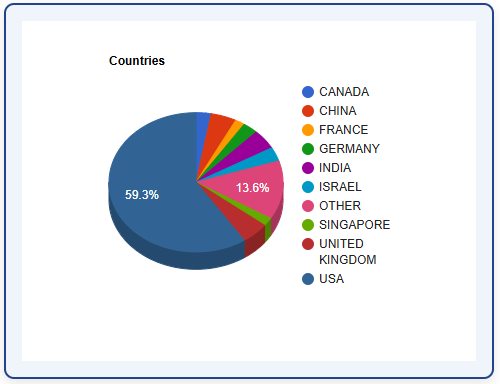
- Free Interactive Tech Chart: Includes an exclusive, complimentary technology ecosystem chart, allowing executives to visually map vendor capabilities, deployment models, and tech-stack dependencies.
- Targeted Categorization: Streamlined indexing enables users to instantly filter resources by service delivery model, industry focus (e.g., healthcare, fintech, industrial IoT, logistics), and geographic footprint.
Strategic Utility Across Industry Roles
The Predictive Big Data Analytics directory serves as a high-utility, multi-purpose tool across diverse professional functions:
- Enterprise Decision-Makers & CTOs: Fast-track vendor selection processes, audit prospective technology stacks, and identify specialized software providers capable of integrating with existing data lakes.
- Procurement & Sourcing Teams: Reduce vendor discovery timelines from months to days using verified category listings, streamlining RFIs and vendor compliance checks.
- Startups & Emerging Tech Innovators: Identify potential integration partners, track competitive positioning, and locate strategic co-development opportunities within the broader global ecosystem.
- Venture Capitalists & M&A Analysts: Access an unvarnished view of the global competitive landscape to uncover undervalued technology firms, track deal flow, and conduct thorough market validation.
- Technology Consultants & Systems Integrators: Expand service ecosystem networks to source hyper-specialized sub-contractors and domain-specific software platforms for client implementations.
- Academic Researchers & Graduate Students: Map real-world commercial applications of advanced predictive algorithms, tracking industry adoption trends and identifying corporate research partners.
Three Strategic Pivot Points for Predictive Analytics Organizations
To help organizations stay competitive amid accelerating market shifts, Computer Review's analytical team has identified three strategic pivot points that forward-thinking analytics leaders, software vendors, and service providers must adopt to maintain market leadership.
Pivot Point 1: Transitioning from Horizontal Platforms to Domain-Specific Predictive Pipelines
The Opportunity
Horizontal analytics engines—platforms that offer generic machine learning modeling for any dataset—are rapidly becoming commoditized. Buyers increasingly reject generic tools that require eighteen months of custom engineering to deliver business value.
Strategic Insight
The highest-margin growth in the predictive sector is moving toward vertically specialized solutions. Organizations that configure predictive models directly for vertical use cases— such as predicting hospital patient readmission rates, forecasting semiconductor equipment failure, or calculating hyper-local agricultural yield—are capturing market share at higher contract values.
Practical Implications
Software vendors and service providers must pivot their go-to-market strategies from general-purpose tools toward pre-built, domain-specific algorithmic packages. Mapping existing industry players using comprehensive sector directories enables firms to identify underserved niche verticals and establish early market dominance.
[ Generic Horizontal Tools ] ---> COMMODITIZATION (Low Margin, High Churn)
|
v
[ Vertically Specialized ] ---> HIGH-VALUE GROWTH (Domain-Specific AI Models)
Pivot Point 2: Integrating Real-Time Streaming and Synthetic Data Systems
The Opportunity
Traditional predictive models trained on historical static data struggle to handle black-swan events, volatile economic environments, and rapid consumer shifts. Furthermore, strict global data privacy regulations (such as GDPR and CCPA) limit access to real-world training datasets.
Strategic Insight
The market is pivoting decisively toward real-time stream processing paired with synthetic data generation. Synthetic datasets allow organizations to train predictive models on edge-case scenarios without violating personal privacy mandates, while real-time streaming engines allow predictions to recalculate dynamically continuously.
Practical Implications
Engineering teams must re-architect predictive pipelines to support continuous, low-latency data inputs. Solution providers that market synthetic data engine integrations or real-time feature stores position themselves as indispensable infrastructure partners for modern risk-conscious enterprises.
Pivot Point 3: Establishing Open Ecosystems and Automated API Partnerships
The Opportunity
Closed, proprietary "walled garden" analytics platforms create severe integration headaches for enterprise IT teams. Modern CTOs actively reject vendor lock-in, favoring modular, composable data stacks that interoperate seamlessly through open APIs.
Strategic Insight
Value creation has shifted from owning the entire technology stack to becoming an indispensable, frictionless component within an open data network. Companies that offer transparent API connections to cloud warehouses, business intelligence dashboards, and external data marketplaces grow significantly faster than monolithic competitors.
Practical Implications
Analytics providers must prioritize API-first product development and cultivate formal technical partnership networks. Utilizing centralized market intelligence directories helps business development executives locate prospective integration partners, building strategic technology ecosystems that increase customer retention and enterprise valuation.
Take a look at our free tech chart.
The Next 3 to 5 Years: The Future of Predictive Data Ecosystems
Looking toward the end of the decade, the predictive analytics domain will undergo further transformation driven by three core forces: Autonomous Decision Loops, Edge Predictive Analytics, and Automated Governance.
| Predictive Analytics: 2026–2030 | ||
|---|---|---|
| Autonomous decision loops | Edge predictive analytics | Automated governance |
| Systems automatically execute operations based on real-time predictions | Processing moves directly to hardware devices for microsecond latency | Real-time monitoring of model drift, bias, and regulatory compliance |
- Autonomous Decision Loops: Predictive systems will move beyond delivering insights via visual dashboards. Instead, they will directly trigger automated downstream actions. Supply chain management systems, for instance, will automatically adjust manufacturing schedules and purchase orders in real time based on predictive demand forecasts without requiring human intervention.
- Edge Predictive Analytics: As microprocessors become more powerful and energy-efficient, predictive algorithms will increasingly run directly on IoT devices, autonomous machinery, and local edge gateways. This shift eliminates cloud latency and bandwidth constraints, enabling microsecond decision-making in industrial environments, medical devices, and connected vehicles.
- Automated Governance and Model Observability: As regulatory bodies step up oversight of algorithmic systems, enterprise adoption will depend heavily on model transparency. Tools that provide automated explainability, continuous model drift detection, and algorithmic bias auditing will transition from optional add-ons to mandatory enterprise requirements.
Organizations that proactively map their vendor ecosystems and adapt to these architectural shifts will define the next decade of data-driven business operations.
Access the Full Market Intelligence Directory
For enterprise executives, product strategists, venture capitalists, and procurement specialists seeking a complete, structured view of the global predictive analytics landscape, the Predictive Big Data Analytics directory published by Computer Review is available for immediate download.
Gain instant access to categorized global market profiles, contact intelligence, and the exclusive Free Interactive Tech Chart designed to streamline vendor evaluation and technology architecture planning.
- To access the ebook directory, explore vendor listings, or download the complimentary technology chart, visit: www.computerreview.com
Knowledge is the Ultimate Competitive Advantage
In an era characterized by hyper-competition and rapid technological disruption, guesswork is no longer a viable business strategy. The ability to quickly identify the right partners, tools, and platforms separates industry leaders from those left behind.
By unifying fragmented market data into a single, automated, and structured resource, Computer Review provides global professionals with the clarity needed to make confident, data-backed strategic decisions. As the predictive big data analytics sector continues to expand, accessing reliable market intelligence remains the single most effective way to navigate complexity, mitigate risk, and capitalize on emerging market opportunities.
Explore the full collection
Browse our full collection of e-Books and our special offer, or take a look at the recent press releases about our latest ebooks.